
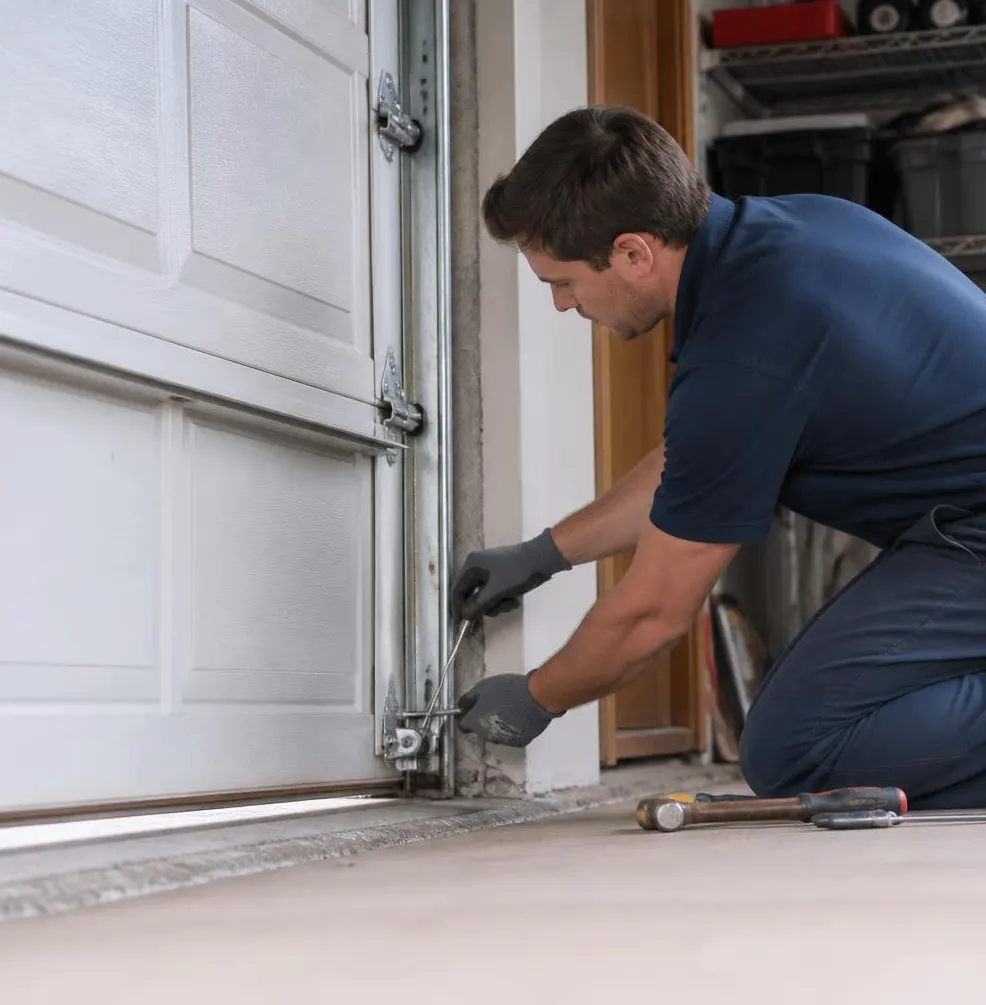
When the power drops, pull the red emergency release cord hanging from the opener trailer, then lift the door by hand using the handle, not the panel seams. To close it, guide it down slowly and lock it manually if you'll be away from the house. When power returns, pull the door down fully, reconnect the release cord to the trailer, and run the opener once to confirm it's back in sync. That's the short version. Here's how to do it without pinching a finger, throwing out your back, or snapping a cable.
Why This Matters More Here
Afternoon storms and hurricane season outages are routine for anyone near Tampa Bay, and a garage door that won't open by remote isn't just inconvenient, it can trap a car inside or leave you locked out during a storm. Humidity also swells wood and composite doors, which makes manual lifting stiffer than it looks on a dry day, and salt air can add rust to release mechanisms and hinges if they haven't been lubricated recently. None of that is dangerous on its own, but it changes how much effort the manual process takes and how carefully you should check the hardware first.
Tools You'll Need
- A flashlight or headlamp (outages often mean a dark garage)
- Work gloves, for grip and to protect your hands from the track edges
- A step stool if the release cord is out of easy reach
- Nothing else — this is a hand-operated process, no tools required to actually move the door
Step-by-Step: Opening the Door Manually
- Confirm the opener is actually disconnected from power. If the outage is partial or you're on a surge-protected circuit, check that the opener's light isn't on before you start pulling cords.
- Locate the emergency release cord. It's the red rope hanging from a lever on the trailer, the piece that rides along the rail and connects to the door arm. It's usually a few feet in front of the opener motor.
- Pull the cord straight down and toward the motor to disengage the trailer. You'll hear or feel a click as it releases from the rail. The door is now unlocked from the opener.
- Lift the door using the handle, not the panels. A properly balanced door should rise with moderate, steady effort and stay partly open on its own. If it feels heavy, jerks, or won't stay up, stop. That's a spring or cable issue, not a power issue, and manual force can make it worse.
- Prop or fully open the door depending on what you need, and get your vehicle or whatever you came for.
Step-by-Step: Closing the Door Manually
- Lower the door slowly, using the handle, keeping your fingers clear of the panel joints.
- Let it settle fully onto the floor track. A door that stops short or bounces back up usually means the track is misaligned or something is blocking the path.
- If you'll be leaving the house during the outage, lock the door manually. Most doors have a slide lock or deadbolt-style lock on the inside near the bottom panel. With the opener disengaged, this is your only security until power returns.
Re-Engaging the Opener After Power Returns
- Make sure the door is fully closed before reconnecting, so the trailer and the door's position match up correctly.
- Pull the release cord again, this time toward the door, or follow your opener's specific reconnect motion. You'll feel the trailer lock back onto the rail.
- Test it with the remote or wall button. The door should open and close smoothly through a full cycle.
- Watch for a door that reverses unexpectedly, stops partway, or makes a grinding noise it didn't make before. That usually means the safety sensors got bumped out of alignment, or the trailer didn't seat correctly.
What's a DIY Job, and What Isn't
Opening, closing, locking, and reconnecting the release cord are all things any homeowner can do safely in a few minutes. What's not a DIY job: a door that feels unusually heavy, won't stay partway open, slams down instead of lowering evenly, or has a visibly snapped spring or frayed cable. Torsion springs in particular are under heavy tension and are not something to troubleshoot yourself, even if the opener itself is fine. If the door won't reconnect to the opener cleanly after power returns, or the opener runs but the door doesn't move with it, that's also a signal something shifted mechanically and needs a trained eye.
When to Call Oldsmar Garage Door
If your door feels off balance when you lift it manually, won't hold its position, or the opener won't properly re-sync after an outage, it's time to call us. We handle garage door opener repair and installation, spring replacement, and general garage door maintenance, and we can also check that your door's hardware is holding up against the humidity and salt air that come with living near the coast. A quick maintenance visit before hurricane season ramps up again next year can catch a weak spring or a corroding release mechanism before it becomes a stuck-door emergency.
If your garage door isn't behaving the way it should, whether it's during an outage or any other day, give Oldsmar Garage Door a call. We serve Oldsmar and the surrounding Tampa Bay area, and we'll get it diagnosed and fixed right.